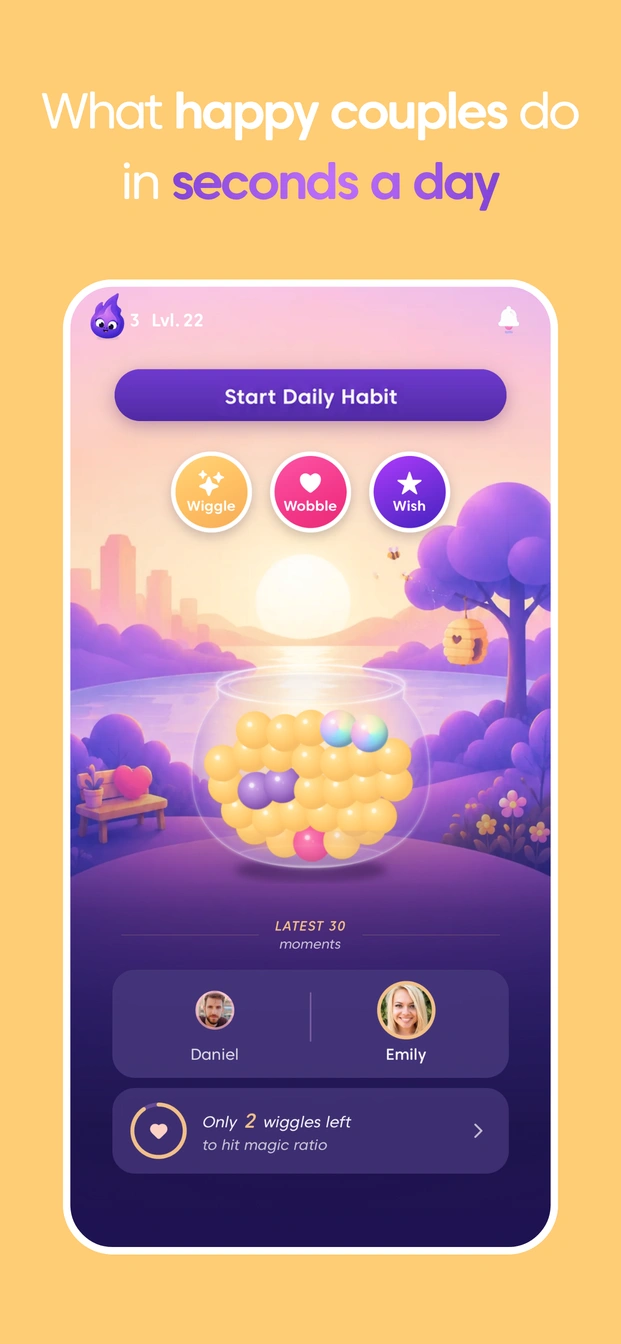
You finish an app question about feeling appreciated. Then your partner mentions the difficult call they made today, and you carry on scrolling. The prompt was completed. The moment it was meant to help you notice is still waiting.
The best app for relationship building should help with something you actually want to practise together: listening, appreciation, a clearer request or returning after a miss. Start with one ordinary moment. A long feature list cannot decide what your relationship needs next.
Name the moment you want to handle differently
Choose a recent, specific example rather than “we need better communication”. Perhaps you want to hear about each other’s day without immediately discussing chores. Or you keep saying thank you without naming what the other person did.
Agree the job: “Could we try one question after dinner and give the answer our attention?” A question library, a reminder and a shared calendar solve different problems. Pick the function before paying for another tool.
Look for a prompt that leads back to the person
The Gottman Institute calls small attempts to connect bids, and describes turning towards them with attention. An app can remind you to notice such a moment. It cannot supply the response for you.
For example, “That call was harder than I expected” might be an opening. Put the screen down and ask, “Would you like to tell me what happened?” A person can want listening, practical help or a pause. Ask rather than assuming the prompt tells you what they need.
Try one small exchange before committing
Use this original trial when both people want to. Ask, “What took more effort than I realised today?” The listener reflects one detail before offering advice: “You had to prepare for that conversation as well as make the call.” Check whether you understood.
Then ask whether a response would help. Perhaps tomorrow’s dinner needs a different owner, or the person only wanted their effort acknowledged. Choose an action only if welcome. When you next use the tool, review whether anything became clearer outside it.
This is an editorial practice, not a treatment or a validated outcome test. One comfortable exchange does not prove an app will suit every subject.
Check the conditions around the habit
Before subscribing, check current access, renewal cost and cancellation. Find out who sees answers, how shared access ends, and whether sensitive information can be removed. Test passing a question and returning after a missed day.
Each person should be able to choose topics and decline without punishment. If one partner has to select every prompt, chase every answer and organise every response, discuss that workload. A daily streak cannot decide who cares more.
Keep the useful part and change what does not fit
A brief question may suit one week; another week needs rest or a practical change. Keep the rhythm flexible and agree when to return rather than accumulating missed exercises.
An app does not diagnose problems or replace qualified care for persistent distress. With intimidation or coercion, seek confidential specialist support instead of using shared answers to confront a partner. The aim is a conversation you can freely take part in.
Next time the difficult call comes up, the most useful feature may be the moment you stop scrolling.