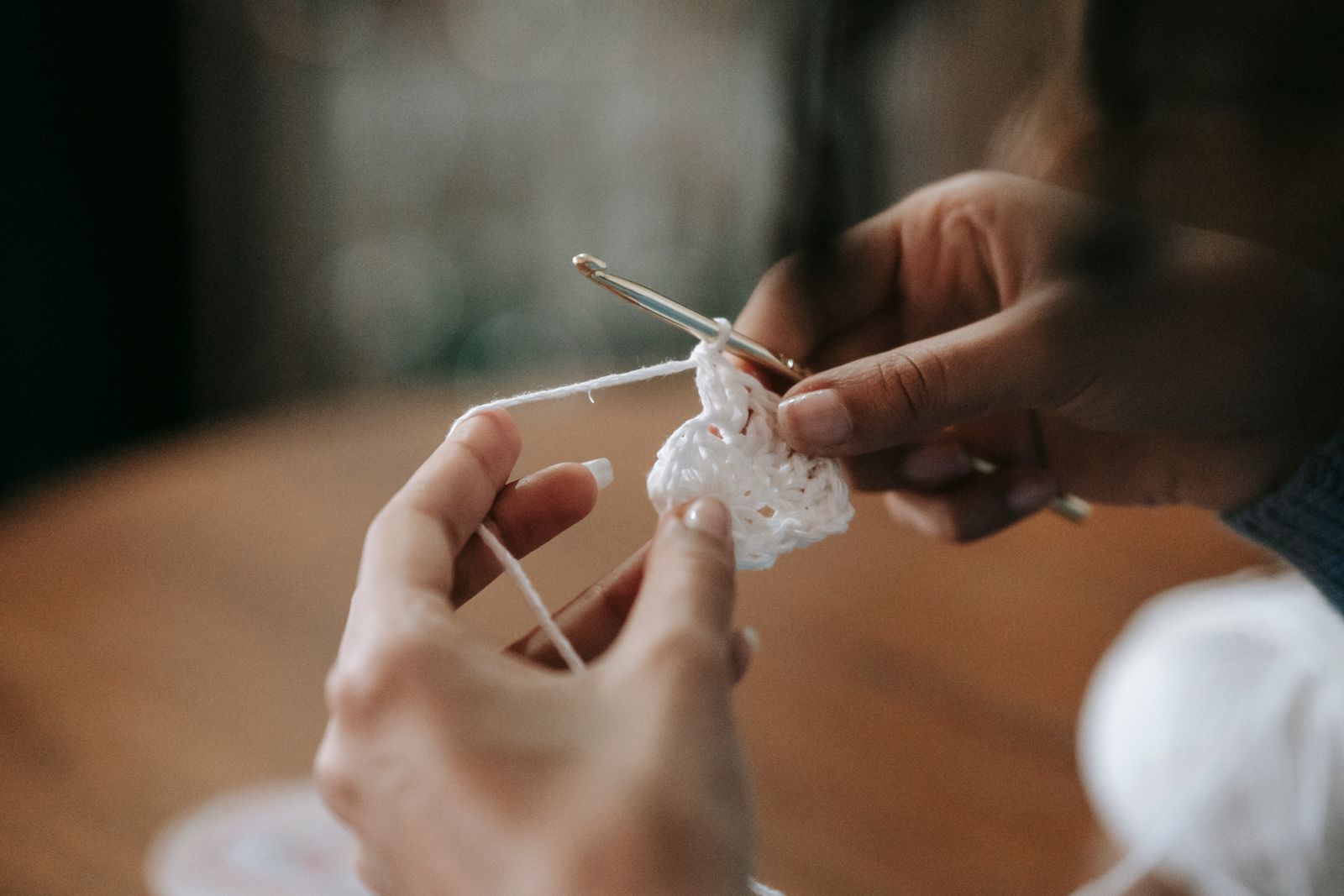
There are two balls of yarn on the table. One of you has made a neat row. The other has made something that could secure a parcel. “Let me do it,” says the confident one, reaching across.
A crochet date night can start with a smaller ambition: make a few stitches, learn something and enjoy the company. When one person knows the craft, it is easy for shared time to become a lesson nobody agreed to. Decide what help you want before picking up the hooks. Choose suitable supplies, check the stitch names and try a short practice piece. The plan below leaves room for different speeds and for putting the yarn away when you have had enough.
Choose a small first attempt together
For two beginners, choose a flat practice piece using one stitch, rather than starting with a fitted garment or a large blanket. A swatch is a small sample of crochet. It can remain a sample: you do not have to turn your first attempt into a present or something useful.
Agree how long you want to spend and what you can afford before buying supplies. Try one short session with a break, leaving time to put things away. If one person prefers another activity, offer it as a choice: “Would you like to try crochet with me, or shall we choose something else?” Interest is an invitation, not a test of affection.
If you already crochet, bring a separate project you can pause easily. Your partner can learn the first steps beside you without needing to catch up. For a shared future project, begin with separate pieces before deciding whether joining them sounds enjoyable.
Buy for the instructions you will actually use
Put out a hook for each person, enough yarn for each small piece, scissors, a stitch marker if the instructions use one, and a place to keep your supplies. You can share the instructions; separate hooks let you both practise. Borrow suitable materials where possible instead of buying a large kit for an untried hobby.
Choose the beginner pattern or lesson first, then check its yarn and hook requirements. The Craft Yarn Council publishes yarn-weight categories and suggested hook ranges, explicitly described as guidelines. Follow your chosen pattern rather than assuming any yarn works with any hook. Ask a craft shop to help match the materials if the specifications are unfamiliar.
Arrange enough light to see the stitches, a comfortable seat and somewhere to put the instructions within reach. Keep the first setup easy to clear away. You do not need a beautifully staged craft corner to have an evening together.
Source:Craft Yarn Council: yarn weights and hook-size guidelines
Check the stitch language before starting
The same stitch name can mean different things in US and UK patterns. The Craft Yarn Council lists US single crochet as UK double crochet, and US double crochet as UK treble. Check which convention your resource uses before pairing a written pattern with a video. Otherwise, two apparently matching instructions may be showing different stitches.
For a first lesson, the Council’s pattern-reading guide explains foundation chains, a row of US single crochet and turning for the next row. It also explains common abbreviations and repeat symbols. Keep the guide beside you and work through its instructions slowly; this date plan is not a substitute for learning how to form the stitch.
If either person uses their left hand, choose instruction that lets them see the movements clearly rather than insisting they mirror their partner at speed. Read a little, try a little, then pause. Starting again is an available choice, not a reason to apologise.
Source:Craft Yarn Council: US and UK crochet terminology;Craft Yarn Council: reading a crochet pattern
Try two rows without making it a race
Here is a voluntary first-session plan. Each choose a small flat practice sample from the same beginner resource, or use different resources if that makes the movements clearer. First, learn the starting knot and chain. Then follow the lesson for one row of its chosen stitch and, if you want to continue, the turn and next row.
Pause at the end of each row and check the count against the instructions. The Council’s guide explains that the loop on the hook is not counted as a chain stitch, and that turning-chain conventions depend on the stitch and pattern. Recheck the relevant step instead of guessing because your partner’s piece looks different.
If a row narrows unexpectedly, put both pieces down and return to the instruction that identifies where the next stitch goes. Take turns reading it aloud if welcome. Keep a finger or a marker at the line you are following. Stop after the agreed session even if the second row is unfinished; completing a date does not require completing a project.
Ask before rescuing someone’s stitches
“Would you like me to show you on my piece, read the instruction with you, or leave you to try?” gives the learner real options. Demonstrate on your own work if invited. Ask before touching their hook, changing their grip or undoing a row. Being able to fix it does not mean you have been asked to.
Imagine your partner pulling the same loop tight three times. You may see the error immediately; they may want another attempt. “I think I can see where it changed. Would you like an idea?” leaves the choice with them. They can also say, “I want company, but I do not want coaching right now.”
If the evening becomes frustrating, pause or change activity. You can say, “I still want time with you. Shall we put this away and have tea?” The effort you already made does not oblige either person to keep going.
Decide what to keep for next time
Before clearing up, each name one thing that suited you and one thing to change: a slower demonstration, fewer interruptions, a different project or a shorter session. Keep unfinished pieces with their instructions and label the step you reached. Split the clear-up so the person who suggested the activity does not automatically leave it to the other.
A handmade gift can come later, if you want to make one. Ask what the recipient would use before committing to a lengthy project, and keep any deadline realistic. Your first parcel-shaped sample can stay exactly as it is. You have discovered how you each like to learn; that is enough to decide what comes next.