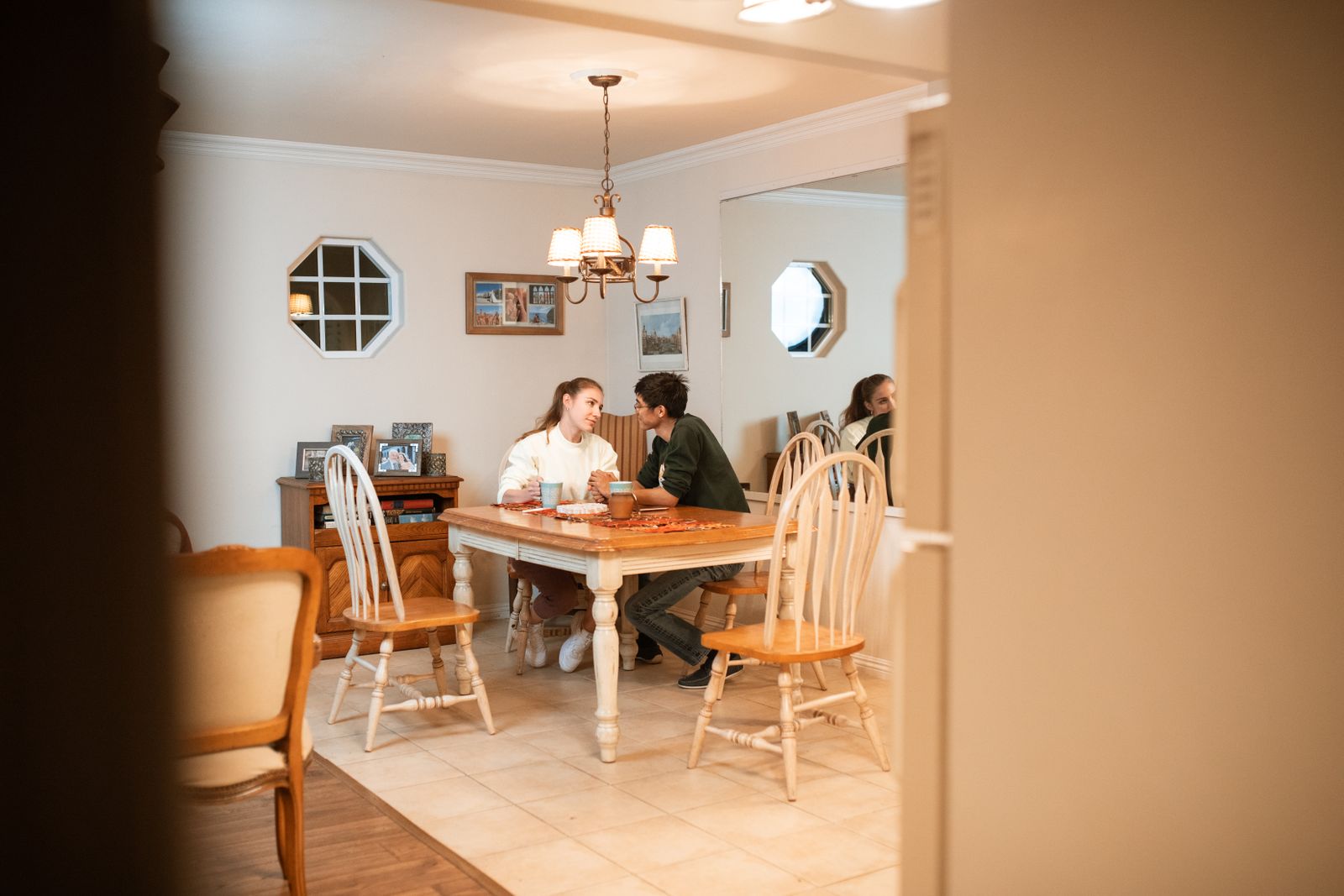
You have pictured a quiet Saturday together. Your partner has already arranged to see a friend. “If I mattered, you would cancel,” arrives before you have said what you actually hoped for. Saturday now has to prove the entire relationship.
Entitlement in relationships concerns what you expect from a partner and how you respond when those expectations are unmet. You can want attention, help or reassurance. The practical question is whether your request leaves the other person a real choice, and whether your own needs get a voice too. Start with the conversation about Saturday, rather than a verdict on either person’s character.
Separate the need from the demand
In the research cited here, relational entitlement describes expectations that a partner will meet your needs and wishes, including reactions when they do not. It is a research concept, not a diagnosis you can assign from one disappointing afternoon.
“I miss spending time with you” names something important. “Could we choose an evening together this week?” makes a request. “Cancel your plans or admit you do not love me” demands compliance and makes refusal costly. The wish for closeness deserves a conversation; the pressure needs stopping.
An expectation may also come from an agreement. If you both agreed to share the childcare on Saturday, a last-minute change affects real responsibilities. Ask what happened and who will cover the work. Respecting choice does not mean pretending commitments never existed, or leaving one person to absorb every consequence.
Source:Candel and Turliuc: relational entitlement diary study
Use three dimensions as questions, not identities
The researchers describe excessive, restricted and assertive relational entitlement. These dimensions can overlap in one person. In brief: excessive means exaggerated expectations; restricted involves difficulty asserting needs or feeling deserving; assertive concerns confidence in asking for needs and rights.
Use those terms to examine a moment, not to sort the relationship into a good partner and a bad one. Here are original examples you can adapt:
- When a request becomes a demand: “You should know I need company, so your plans must change.” Try naming the wish and asking about an option you can both choose.
- When your preference disappears: you say Saturday is fine, though you hoped to spend time together. If speaking is safe, try “I agreed too quickly. I would like us to plan some time together.”
- When both voices stay present: “I want time with you, and I understand you made plans. Could we look at another evening?” You can say what matters without requiring the same answer.
Source:Candel and Turliuc: relational entitlement diary study
Read the evidence before turning it into a rule
Candel and Turliuc’s 2021 study followed 99 couples for seven days, with twice-daily reports. Participants were recruited through a Romanian university. Higher excessive entitlement was associated with lower satisfaction. Restricted and assertive entitlement had no overall satisfaction association. The study was correlational and relied on self-reports; it cannot prove causation or predict your relationship.
That is a reason to keep the labels modest. A single example cannot establish somebody’s childhood, attachment style or mental health. Nor does the paper prove that more disclosure, gratitude or accommodating demands will solve a harmful pattern. Look at the behaviour, its effect and what happens when either person says no.
Source:Candel and Turliuc: relational entitlement diary study
Make a response that includes both people
PACT founder Stan Tatkin describes simultaneous care: considering your own needs and your partner’s together. Applied to Saturday, this means giving the wish for company and the existing friendship plan a place in the conversation. The example below is editorial practice, not a PACT treatment exercise.
One person might say, “I had imagined us having lunch together. I am disappointed, but I am not asking you to cancel.” The other could answer, “I want to keep my plan. I would also like time with you. Shall we cook on Sunday?” Either person can decline that suggestion. You are looking for an agreement, not a way to extract yes.
If you made the threat about cancelling, repair that part first: “I put pressure on you. That was unfair. I can ask for time without making you prove you care.” Do not add “but you made me feel…” to hand responsibility back. The other person does not owe immediate reassurance or forgiveness.
Try one request with room for an answer
Choose an ordinary topic you both feel safe discussing. Keep major decisions and frightening interactions out of this practice. You can do your own reflection first; your partner does not have to join in. This is an editorial conversation aid with no promised outcome.
- Name the moment: “When I heard about Saturday, I realised I had been expecting lunch together.” Describe what happened without claiming you know their motive.
- Name your wish: “I would like some time when we are not organising errands.” If you are unsure, take time to work out what you want before asking.
- Make one specific invitation: “Would you like to choose an evening this week?” Avoid attaching a test of loyalty, a threat or an obligation to touch or have sex.
- Listen to the answer. The other person can say yes, no, not now or suggest something different. You can acknowledge disappointment without turning it into punishment.
- Check what was actually agreed. “Sunday cooking, if we both still want it” is clearer than assuming the conversation settled every future weekend. Afterwards, ask whether both people had a genuine say.
A boundary does not make you selfish
The Hotline describes respect, equal say, boundaries and freely given consent as features of healthy relationships. It distinguishes these from control, isolation and pressure. Being together does not entitle either person to passwords, constant availability, money or sexual contact.
Being quiet is not enough evidence to call someone restrictively entitled. If you fear anger, threats or retaliation, silence may be how you are getting through the situation. You do not need to prove you can be more assertive before seeking help. Skip the joint exercise and seek confidential advice from a domestic-abuse service, using a safer device if needed.
In an ordinary disagreement, a boundary could sound like “I will discuss weekend plans, but I will pause if I am being insulted.” Repeated broken agreements or incompatible priorities may need a larger decision about the relationship. An inability to find agreement does not give anyone permission to coerce.
For patterns you struggle to understand or change, consider individual help from an appropriately qualified professional. You can take responsibility for your own demands without taking responsibility for another person’s harmful behaviour. Saturday can become a day you plan, rather than a test someone has to pass.
If saying no puts you at risk, seek confidential specialist advice instead of trying this together. In immediate danger, contact local emergency services when safe.