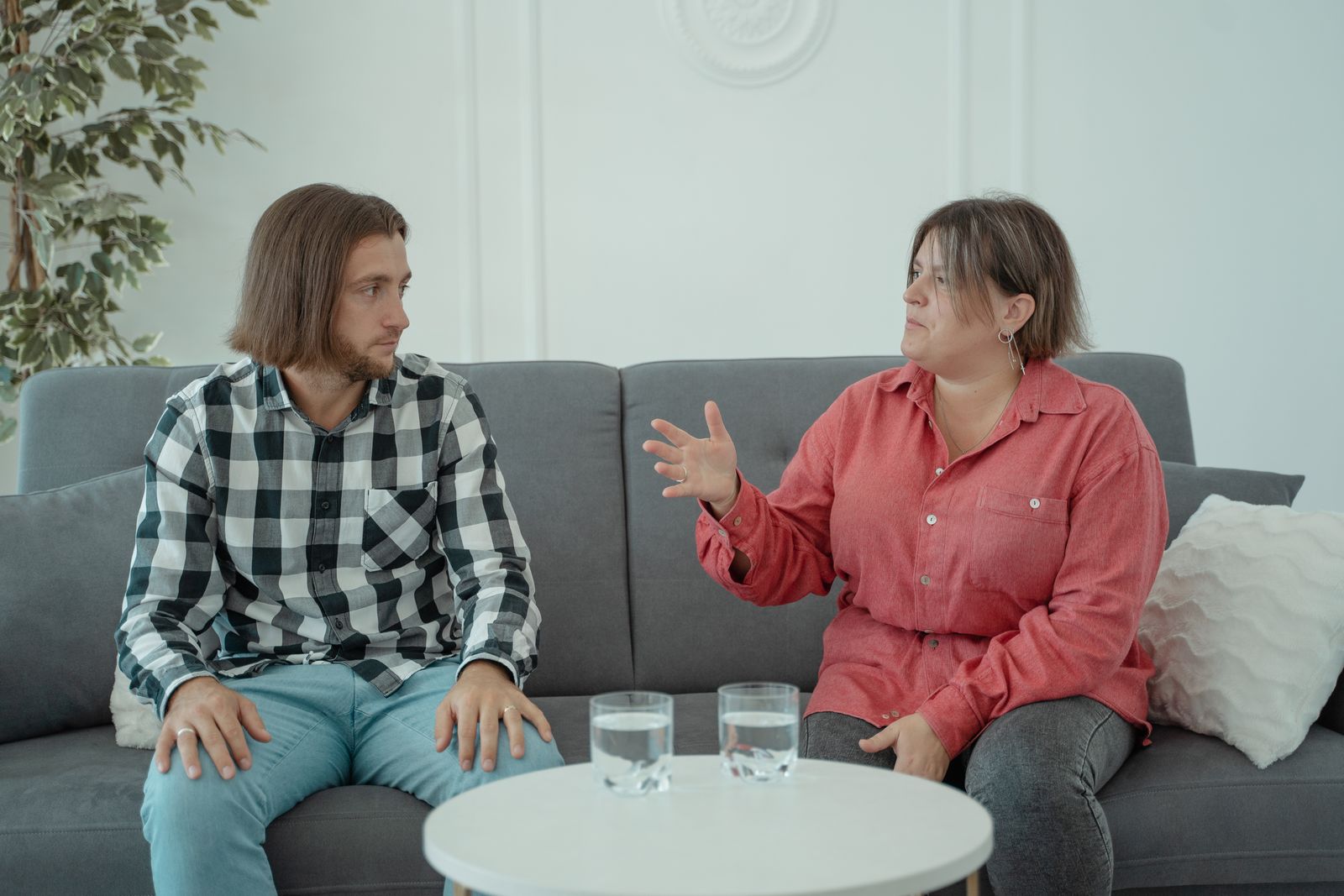
You suggest the film you both wanted to see. Your partner shrugs. You hear, “I don’t want to spend time with you.” They may be struggling to want anything at all.
How depression affects relationships depends on the person and the circumstances. It can change the energy available for conversation, shared plans and affection. That can leave one person feeling disconnected and the other feeling misunderstood. Understanding possible symptoms gives you another explanation to consider; it does not tell you what your partner feels about you or erase the problems between you.
What depression can change between two people
NIMH describes depression as a condition that can affect feelings, thinking and daily activities. Possible symptoms include reduced enjoyment, low energy, irritability, withdrawal, difficulty concentrating and changes in sleep or sexual desire. A qualified clinician can assess symptoms; a quiet evening or cancelled plan alone does not establish depression.
In everyday life, those difficulties might appear as an unanswered message, trouble deciding what to eat or little enthusiasm for a favourite routine. The practical effect is real, even when it was not intended as rejection. Ask what is happening before assigning a motive.
Try: “I’ve noticed choosing dinner seems hard lately. Is making a decision the difficult part, or would you prefer some space?” The answer may surprise you. Your task is to understand this moment, not to fit every interaction into a diagnosis.
Do not make every difficult moment a verdict on love
Imagine one partner withdrawing from weekend plans. The other asks for reassurance more urgently; the first feels more pressure and says even less. This is one possible interaction, not a universal depression pattern. Naming the sequence can help you discuss what each person is doing without treating either person as the problem.
You might say: “When the plan disappears without a message, I feel left waiting. Could you let me know you need to cancel, even if you cannot explain much?” A limited, honest reply is more useful than a promise to feel enthusiastic.
If you are living with depression, you do not need a polished explanation: “I’m finding conversation difficult today. I care about you, and I cannot manage dinner out.” Say only what is true. If your relationship feelings have changed, depression should not be used to dismiss that possibility either.
Keep contact available without making it a performance
Mind suggests maintaining contact without pressuring someone to reply and keeping room for ordinary shared interests. Depression need not become the subject of every conversation. The NHS also advises listening without judgement and encouraging professional support.
Offer something specific that can be declined: “Would company while I cook be welcome, or would you rather have quiet?” If your partner accepts, let the activity be ordinary. You do not need to check whether they are enjoying themselves every few minutes.
If they say no, respect it and discuss a manageable way to stay in touch later. You can express your own loneliness without requiring them to manufacture an emotion: “I miss spending time together. Can we talk about what contact feels possible this week?”
Source:Mind: supporting someone with depression;NHS: helping someone with depression
Agree what happens to the practical work
Illness does not stop rent, dishes or childcare from needing attention. Avoid silently taking everything on and then discovering that neither of you knows how the arrangement changed. Choose one responsibility that needs a clear plan.
For example: “Cooking feels beyond me this week. Could we use simple meals, and could you handle the shopping?” The other person might answer: “I can shop on Tuesday. I cannot cover every evening, so let’s ask for another kind of help.” Agree the task, who owns it and when you will review the arrangement.
The review is about whether the plan is workable, not whether someone has recovered quickly enough to deserve help. If essential needs cannot be met safely, seek appropriate professional or practical support. A couple should not have to invent an entire care system alone.
Keep consent, privacy and accountability intact
A change in sexual interest is a reason to talk gently about what is welcome, never a reason to press for proof of love. Company, affection and sex are different choices. “I would like to sit beside you, without touch tonight” is a complete request.
Neither partner owes access to private messages, therapy notes or medical records. Ask what information your partner wants you to know and what support they welcome. Do not make monitoring the price of remaining together.
Depression also does not excuse insults, threats or control. You can acknowledge distress and say, “I want to hear you, and I will not continue while I’m being insulted.” Where there is abuse or fear of retaliation, seek confidential specialist support. The Hotline explains why joint counselling can increase risk in an abusive relationship.
Source:The Hotline: why joint counselling can be unsafe with abuse
Choose qualified care for symptoms, not more relationship homework
If you suspect depression, speak with a qualified healthcare or mental-health professional. NIMH explains that treatment commonly includes psychotherapy, medication or both, chosen with a clinician. Ask that clinician about troublesome symptoms or possible medication effects rather than changing medication yourselves.
Help can be practical: offer transport, prepare questions together or take over an agreed task during an appointment. Ask first. If relationship difficulties also need attention, discuss whether individual care, couples work or both are appropriate; one does not automatically replace the other.
A relationship app may offer a voluntary conversation prompt. It cannot diagnose or treat depression, assess danger or promise to restore attraction. If an exercise becomes another demand, stop using it. Care can be a smaller promise kept while professional support addresses what a conversation cannot.
Know when to seek urgent help
Seek urgent professional support for suicidal thoughts or a mental-health crisis. In England, contact NHS 111 and select the mental-health option, or ask for an urgent GP appointment. Call 999 or go to A&E if life is at risk or you cannot keep yourself or someone else safe. In the US, call or text 988 for crisis support; call 911 for life-threatening danger. Elsewhere, use local crisis or emergency services.
You do not have to settle the relationship question before getting help. Tonight, the next useful conversation may simply be: “Something has changed, and we need more support than we have.”
Source:NHS: urgent mental-health help;NIMH: depression symptoms, assessment and treatment