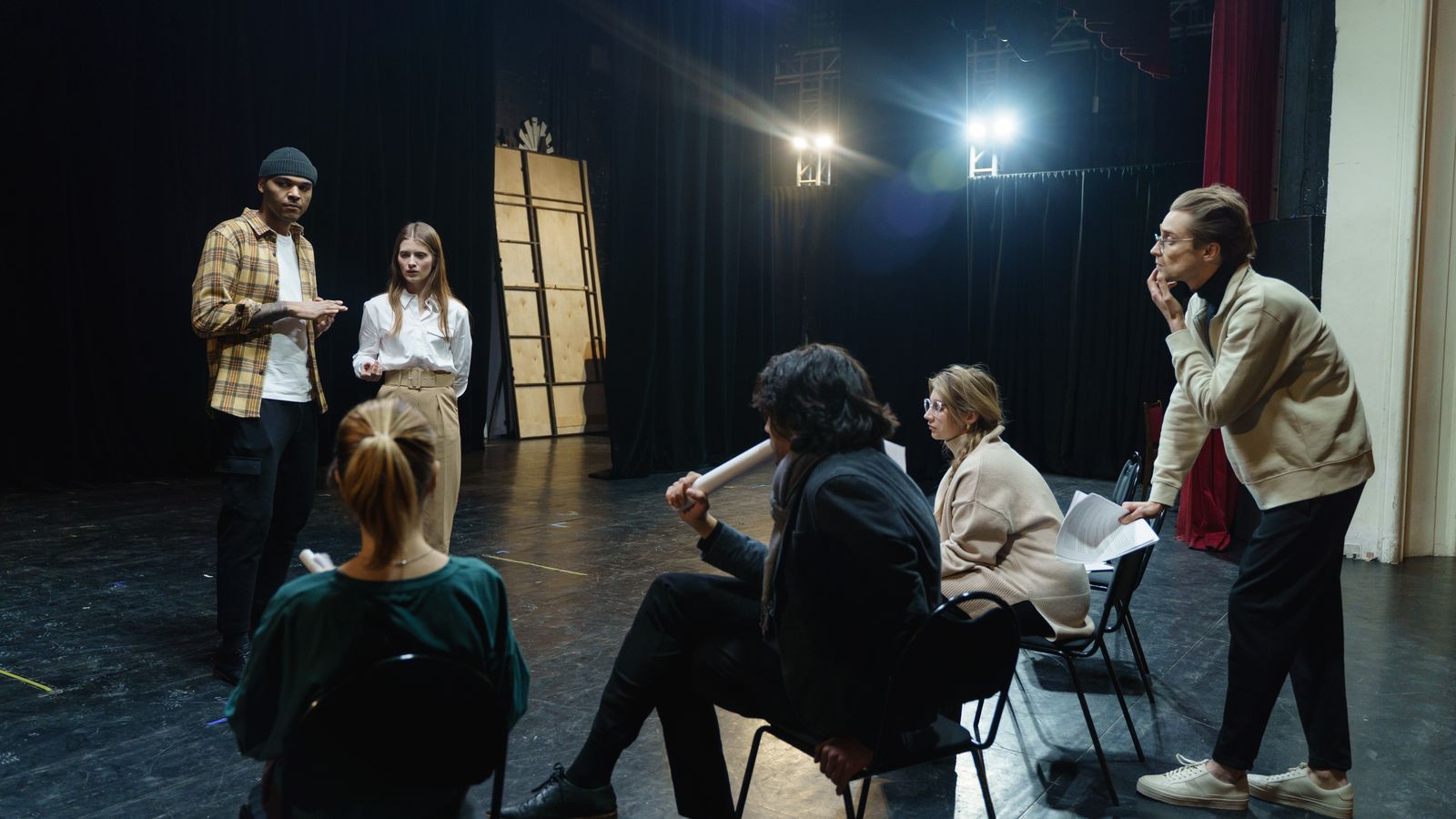
You send a beginner improv class listing. Your partner replies, “Will we have to stand up in front of everyone?” You were imagining a different date night. They were imagining an unexpected audition.
An improv date night means making up a scene, story or response as you go, without a prepared script. It can be an activity you choose together, in a class or at home. First, work out what each of you actually wants to try. You do not need matching enthusiasm for performing, and a pleasant evening does not require anyone to become funnier.
Choose the kind of play you both want
Ask what appeals: an instructor with clear activities, trying something new outside the house or a short game at the kitchen table. Ask what does not appeal too. Watching a show, joining a class and inventing a story together are different dates.
The Second City describes beginner improv through listening, making offers and “Yes, And”. That is information about its curriculum, not evidence that attending improves a couple’s trust, communication or mental health. Treat any class as an activity to consider, rather than a relationship intervention.
You could say, “I want to try making up a silly story together. Would home suit you better than a class?” A no is an answer, not a confidence problem to overcome.
Source:The Second City: what a beginner improv class includes
Ask what a beginner class actually involves
Before booking, contact the provider rather than filling in the details yourself. Their description may leave practical questions unanswered. Being called beginner-friendly does not tell you whether you will perform, be recorded or work with unfamiliar people.
- Is this a one-off introduction or part of a course, and what experience is expected?
- Are there public performances, individual spotlights or activities involving touch? Can someone pass or choose a seated alternative?
- Can two people attend together, and will participants also work with others?
- What access arrangements, breaks and communication needs can the instructor accommodate?
- What is the complete cost, and what happens if you cancel or need to leave?
- Are recordings or photographs taken, and how can someone decline?
Compare the answers with your own limits, budget and travel. Neither partner should have to manage the other’s participation throughout the class. Choose another activity if the format does not suit.
Give fictional offers room, while keeping real choices clear
Within a scene you have both agreed to play, “Yes, And” means working with an offered idea and adding something. If your partner invents a café on the moon, you might add a menu rather than arguing that cafés need atmosphere.
That convention belongs inside chosen fictional play. It never requires accepting unwanted touch, personal teasing, an upsetting subject or a real request you dislike. Love is respect’s guidance keeps boundary changes voluntary. You can say, “Different scene, please,” or “I am finished.”
Choose neutral subjects before starting: imaginary places, ordinary objects or made-up characters. Keep actual disagreements, private memories and impressions of each other outside the game unless separately and freely agreed.
Source:love is respect: expectations and freely chosen boundaries
Game one: open an unlikely little shop
Invent a shop that sells something ordinary in an unusual setting. Take turns adding one detail about the place or its customers. End when both have added a few ideas, or earlier if you want. No acting voices or standing up required.
A worked exchange: “We sell umbrellas inside a submarine.” “Our customers use them to keep biscuit crumbs off their maps.” “We need a sign saying maps stay dry, biscuits stay yours.” “The owner has brought a very damp biscuit.”
Each line uses something already offered and gives the other person a detail to pick up. The result can be absurd or completely unremarkable. You are making the shop together; nobody needs to rescue the scene with a punchline.
Game two: give an ordinary object a new job
Choose a harmless object you can see, such as a mug. Invent a new fictional use without actually using it dangerously: a miniature observatory, a hat shop for snails, a very small waiting room. Your partner adds one detail about how that place works.
Keep the object where it is. This is a spoken invention, not a practical challenge. Swap who begins, or each draw the imagined place on scrap paper. A seated or written version is equally available when you both prefer it.
Game three: tell a short story by turns
Choose an ordinary starting point: “A parcel arrived with no address.” Add one sentence each, using a detail from the previous contribution. Agree that the characters are invented and either person can ask to change direction.
You might add, “Inside was a timetable for yesterday.” Your partner adds, “The delivery person had been looking for the right Tuesday.” Stop at a natural ending or invent one together. You can write it by turns, without expecting immediate replies, if that suits your availability.
Keep the rules light. If one person starts narrating every sentence or correcting every invention, pause and ask whether a different format would be more enjoyable.
Keep what you enjoyed, then finish
Afterwards, ask what each person liked: the strange shop, the clear turns, the short duration or nothing in particular. You may prefer another date. There is no banter score and no need to analyse a quiet partner’s personality.
If a joke hurts, stop and address it plainly rather than insisting that everything counts as play. An unresolved concern still needs its own attention; a fictional story cannot settle it.
Next time, the class listing might lead to a booking or stay on the phone. Either way, make the invitation clear enough for both people to choose the evening they are actually joining.

