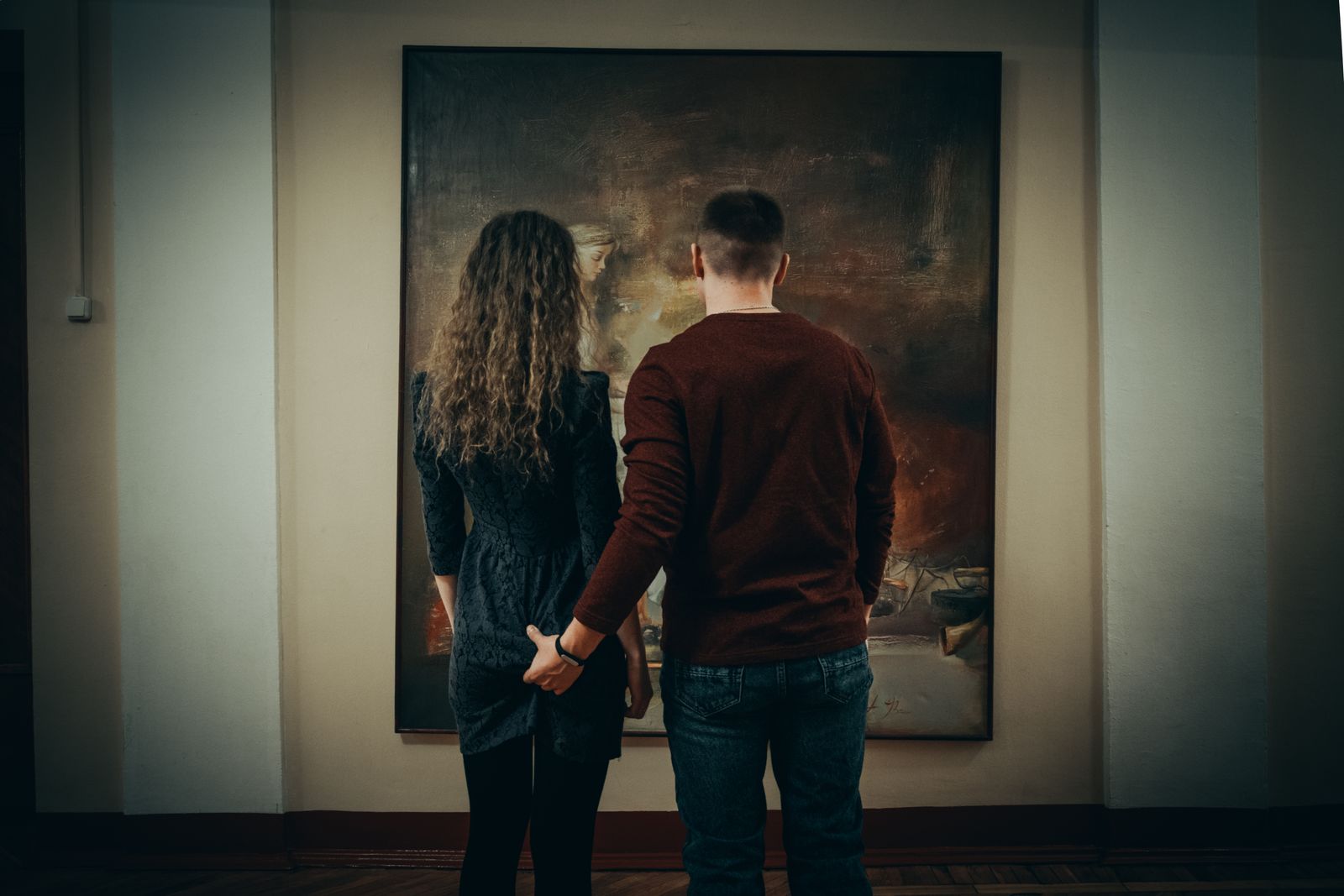
You have read every label in the first room. Your partner has already found the exit to the café. Somewhere between the pottery and the portraits, your shared afternoon has developed two separate itineraries.
Good museum date ideas account for how you both like to explore. You do not need matching expertise or an ambitious route. Choose a small part of a museum or gallery, leave time to talk and let each person lead for a while. The plan below gives your visit a shape without turning it into a guided test.
Plan a visit you can both enjoy
Before booking, choose between a short exhibition, a favourite collection or a single room. Agree an approximate finish and a total budget, including travel. Check the venue’s current hours, admission, booking requirements and accessibility information directly; a general guide cannot promise free entry or step-free access.
Ask about seats, audio description, quieter visiting times or other support you need. Include a rest stop that does not depend on buying something. A person who needs to sit down is not rejecting the date. Divide the planning: one checks the visit, the other sorts the journey.
Choose one object each, without defending your taste
Begin with a short wander. Each choose something you would like to stay with: a dress, a fossil, a painting or a curious machine. It can be beautiful, puzzling or simply odd. Being interested is enough; you do not need an impressive reason.
At the first choice, its chooser shares one detail before the other offers an opinion. Try: “The tiny shoes caught my attention. I keep wondering who wore them.” Your partner might have noticed the workmanship instead. Both observations give you somewhere to start.
Try a small listening experiment
At one stop, invite your partner to describe what caught their attention. Ask one follow-up based on their answer, then check whether you understood: “So you’re curious about the person who used it, more than how it was made?” Let them correct you before explaining your own reaction.
Swap at the next object. Keep this voluntary and brief. Nobody needs to share a personal memory, maintain eye contact or produce an emotional insight. An answer such as “I like the blue” can remain that simple.
The National Gallery of Art’s educational slow-looking activity invites viewers to pause and notice details in a still life. Our date suggestion borrows that modest idea of giving attention time; it is not a tested couples intervention or a promise about your communication.
Use a prompt when conversation needs a start
Choose one question, then follow the answer: “Which detail would you miss in a photograph?” “What would you ask the maker?” “What surprised you after reading the label?” These are invitations to explore the object, not tests of your knowledge.
You can also each choose something that belongs in an imaginary room at home. Explain where you would put it and why. Your partner may select a gigantic industrial engine. Finding space beside the sofa is part of the game, not a decorating proposal.
Disagree about the work without ridiculing the person. “It feels busy to me; what do you enjoy about it?” leaves more room than declaring their choice rubbish. If either person feels judged, stop the exercise and return to ordinary browsing.
Make the shorter version a real option
When energy fades, choose one final stop and leave. You do not need to see every floor to justify coming. Over a drink or on the journey home, each name something the other helped you notice. Share the date’s practical review too: was the route comfortable, and was there enough time?
For an at-home version, use a museum’s official online collection. Send each other one object link, use the available description or audio, and discuss it without racing through dozens of tabs. No travel, ticket or specialist vocabulary required.
Back at the café, perhaps you still disagree about the pottery. But now you know why your partner stopped there. That is a more interesting souvenir than finishing every label.