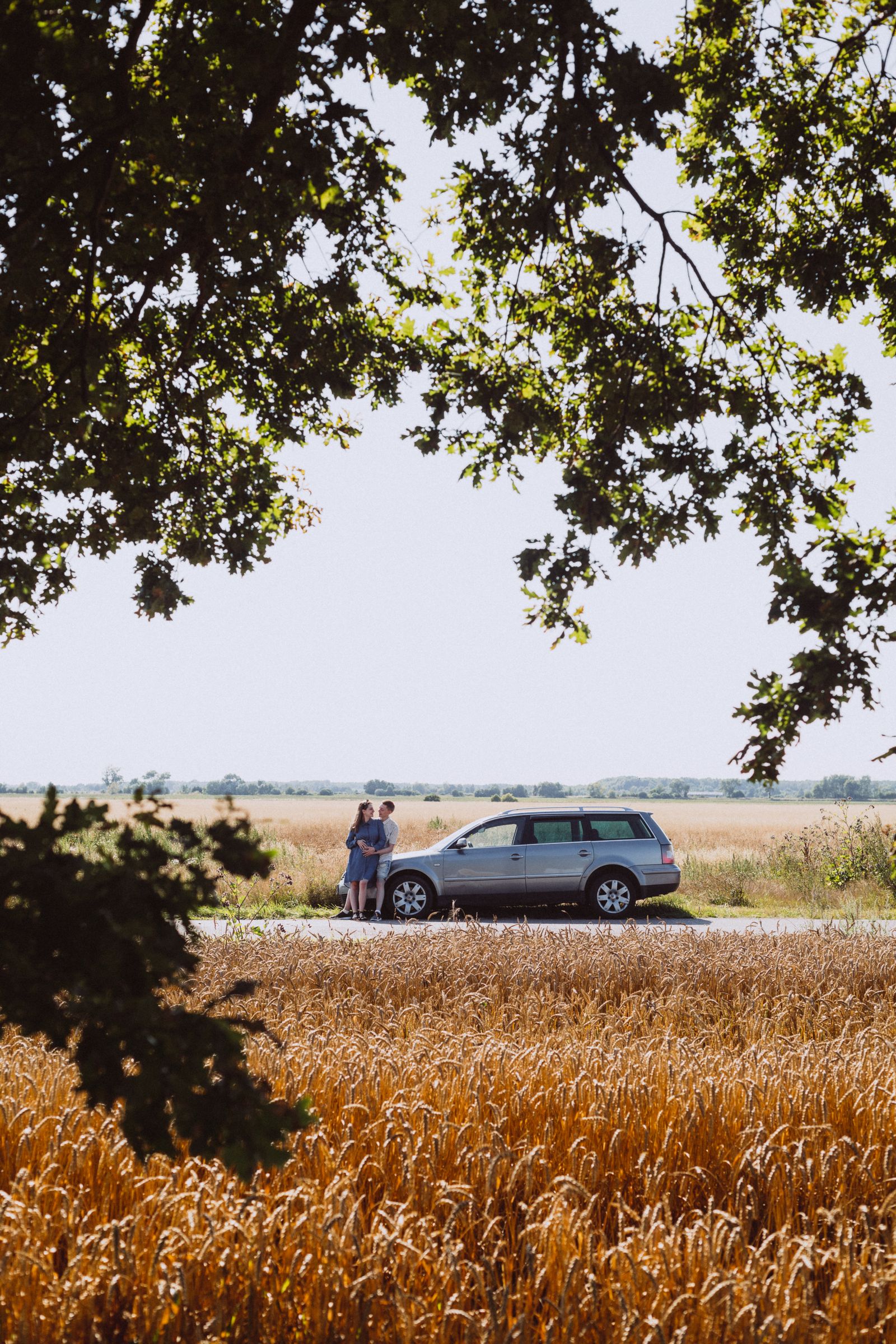
The snacks are packed, the route is ready, and you have already discussed the weather in considerable detail. You would like something fun to do together. Your partner would quite like ten minutes without another question.
Good road trip games for couples fit the journey and the people taking it. These nine ideas need no app or purchase: six spoken games for passengers and three for a proper stop. If one of you is driving, save the two-player rounds until you are safely parked, or use them when travelling as passengers together. A journey can include play, ordinary conversation and quiet.
Choose the game around the driving, not the other way round
The UK Highway Code says driving needs concentration and warns against distractions, including arguments, loud music and adjusting entertainment. These games are not assessed as safe driving tasks. Keep screens, reading, searching the roadside and competitive or absorbing rounds away from the driver.
For two people travelling alone by car, the passenger can choose a prompt to share at the next planned break. Do not ask the driver to read, keep score or look at something for the game. Being stopped at lights or in a queue is not a parked break.
When you are both passengers, ask whether nearby people are comfortable with conversation and keep the volume considerate. A quiet voice, paper at a stop or simply leaving the game for later may suit the journey better.
Source:GOV.UK Highway Code: driver concentration and distractions
Three spoken games for a light start
Use these when neither player is driving. Agree a short round and let either person stop without finishing a turn. They also work across a café table during a break.
- 1. The tiny museum. Each name an ordinary object you would put in a museum of this trip, then give it an extravagant exhibit label. A crumpled napkin could become “The Last Surviving Map of Lunch”. Add one exhibit each, explain your choices and stop when your collection feels complete.
- 2. Three clues, one ordinary thing. Think of a familiar object and offer three clues, from broad to specific. “It travels with us, it has a lid, it once held cold tea” might lead to a flask. Take turns guessing; choose another clue instead of imposing a time penalty.
- 3. The imaginary café. Build a tiny café together by alternating decisions: its name, one dish, a house rule and an unusual decoration. Perhaps it serves toast under a chandelier made of teaspoons. You can disagree and invent a third option. Finish by describing your opening-day menu.
Three spoken games with a little more story
Choose this round when you both want to listen as well as play. Keep memories voluntary and leave sensitive disagreements for a suitable private setting.
- 4. Same place, different detail. Pick a place you have both visited. Each describe one detail you remember without correcting the other’s account. Ask one follow-up, such as what made that moment stand out. You are collecting perspectives, not deciding whose memory wins.
- 5. The postcard voice note, without a phone. Give an imaginary spoken postcard from somewhere you would like to go. Include a sound, something on the table and one thing you would do there. Your partner adds a reply. Stay with imagination; no booking or spending is implied.
- 6. Change one detail. Start with a harmless scene: two people arrive at a picnic with an enormous cake. Alternate changing one detail and explaining what happens next. Perhaps the picnic is indoors, or the cake is for a very small celebration. Keep real people’s embarrassing stories out of it.
Three games for a proper stop
Play these once safely parked or seated away from traffic. Choose a suitable place and keep the planned rest available for food, toilets and whatever else you need. A game should not consume the whole break.
- 7. One-view sketch swap. Each draw the same harmless object, such as your mug, on a scrap of paper. Swap and add one imaginary detail with permission. No artistic score is needed. Compare the stories your pictures suggest rather than who drew more accurately.
- 8. The six-letter packing challenge. Draw six boxes labelled A to F on scrap paper. Together, fill them with things you might pack, beginning with each letter. Make a sensible version, then an absurd one: an adapter could become an accordion. Skip any letter that stops being fun.
- 9. Next-stop wishes. Separately name one small thing you would enjoy during the rest of the trip and one practical need. Compare and choose a plan that fits both, or leave it undecided. For example, a scenic stop can wait until after the person who needs lunch has eaten.
Let quiet be part of travelling together
Ask about energy before choosing another round: “Would you like a game at the next stop, music we have already set up, or some quiet?” A no does not need to become a discussion about whether your partner enjoys your company.
Stan Tatkin’s PACT guidance describes caring for yourself and your partner simultaneously. In our travel example, that means taking your wish for company seriously alongside their need for rest. It does not require either person to entertain the other throughout the journey.
If you are disappointed, make a manageable invitation for later: “I would love to hear your postcard when we stop for lunch.” Let the answer remain optional. Avoid saving a serious relationship confrontation for a car journey where leaving the conversation may be difficult.
Finish the round while you still like it
Choose one game rather than trying to complete the whole list. Change the format if it feels awkward. Spoken clues might work when drawing does not, and an invented story may be more welcome than a question about your past.
Keep road-trip games separate from keeping a tired driver awake. If the driver is tired, find an appropriate safe place to stop and rest; entertainment is not a solution to fatigue. Check current local driving guidance for your route.
At your destination, keep one small detail from the game if you both want to. Perhaps the imaginary café becomes the name of breakfast tomorrow. You can bring home a shared joke without filling every mile with words.