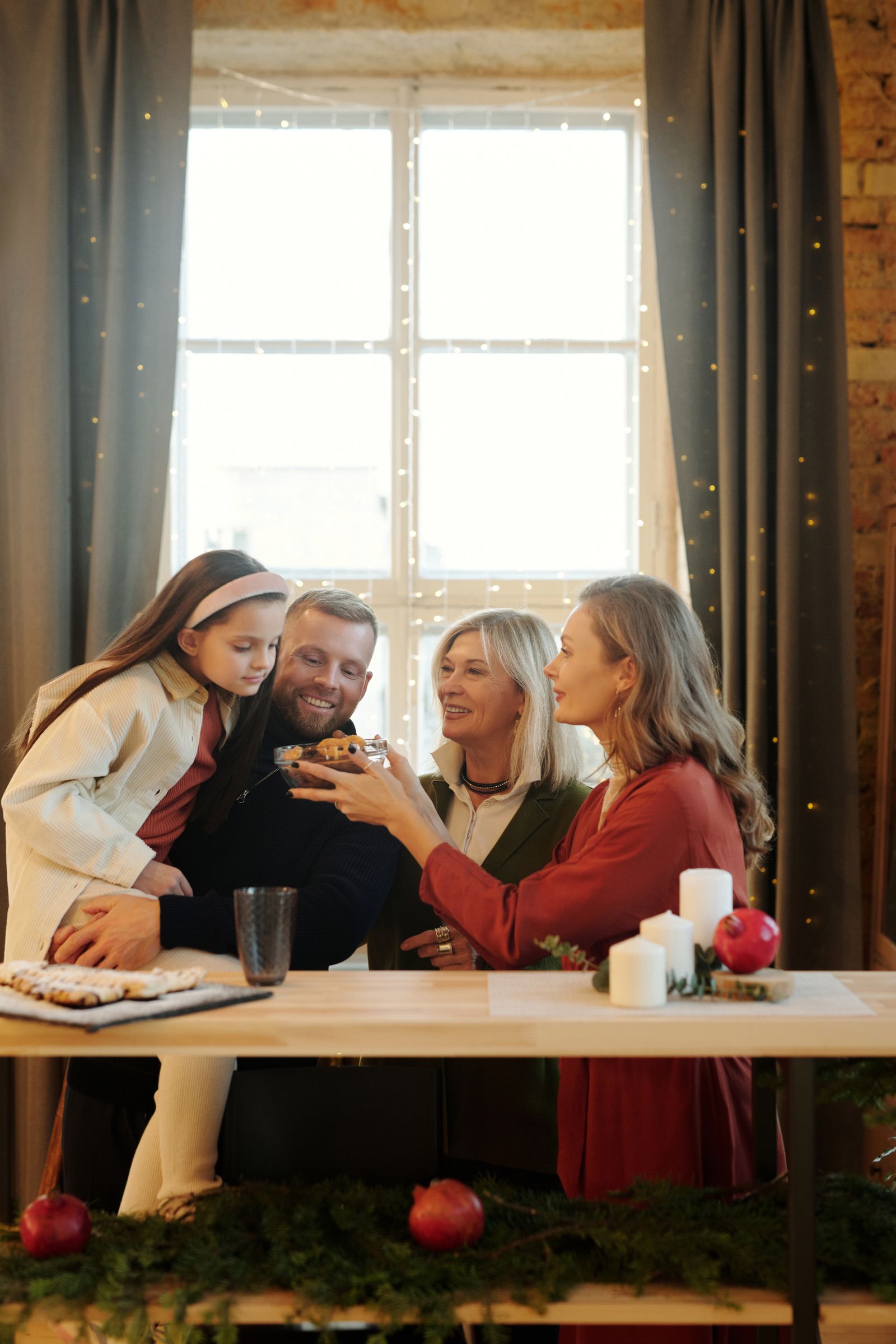
A gathering can be worth attending without every minute being easy.
The brownies are wrapped by the front door. Your partner is finding the serving plate; you are already rehearsing the question about when you will have children. Nobody has asked it today. Last time, they asked it three times. A workable plan for surviving family gatherings starts with that difference: what you expect, what has happened before and what choices you want to keep. You do not need to arrive perfectly calm or promise to stay until the last plate is washed.
Give the worry a concrete shape
“I hate family events” leaves a lot to solve at once. Try something answerable: “I do not want our plans for children discussed”, “I struggle when five conversations happen around me”, or “I worry we will stay overnight after agreeing to come home.” Each points towards a different preparation.
Separate a prediction from known conduct. A cousin might ask an awkward question; you can prepare a brief answer. Someone who has threatened you presents a safety concern, not a confidence challenge. The NHS recognises abuse by family members. Fear of retaliation calls for confidential specialist advice rather than practising how to tolerate the gathering.
Write one aim you actually choose: see your grandmother, share lunch or introduce your partner. You may change the format, meet someone separately or decline where appropriate. If anxiety repeatedly limits things you want to do, get qualified help with that pattern. This article cannot decide whether attending is right for you or provide exposure treatment.
Arrange the visit before the serving plate is packed
Discuss arrival and departure, travel, access needs, food and any overnight expectations. “We can stay for lunch and leave at three” is a plan only if the journey home is available. Check a lift, bus or other suitable option; consider weather, mobility and the actual cost. Do not make leaving depend on a promise that everyone will agree you have had enough.
If you are hosting, decide what you can offer and what visitors need to arrange themselves. “We have space for lunch, but not overnight guests.” Share useful details in advance rather than turning the doorway into a negotiation. Where obligations or dependence limit your choices, plan within those realities and seek appropriate advice.
A partner may want a longer visit while you want a quieter afternoon. PACT founder Stan Tatkin describes caring for both people’s needs together. As a voluntary editorial example, consider a shared lunch followed by separate plans and separate transport. Either person can decline a proposal; care does not require attendance, unwanted touch or a forced compromise.
Prepare one reply, not a complete defence of your life
Choose a phrase you can use without explaining more than you want: “We are keeping that decision private.” You might then ask about something genuinely welcome, such as a relative’s new garden. Changing the topic is an option, not a promise that nobody will be offended.
Coach Hailey Magee’s guidance at The Gottman Institute distinguishes requests from limits on your own participation. You can ask someone to stop a question, and decide whether to remain in that conversation. In this original example: “I have answered that. I am going to join the others now.” Choose what you can safely do.
You do not owe a joke about a hurtful remark. You can disagree with discrimination plainly, leave a conversation or seek support according to the circumstances. Nor must you spend the afternoon correcting every opinion. Keeping a private topic private does not require anyone else to endorse the choice.
For partner support, be specific beforehand: “If that question comes up again, could you help change the subject?” Ask what they are willing to do. A discreet check-in could be “Would you like a few minutes outside?” It should offer a choice, rather than become a signal that one person must obey.
Source:Hailey Magee at The Gottman Institute, requests and boundaries
Take a break without turning it into a performance
If you want a pause and can take one safely, choose an available place: a quieter room, a seat away from the busiest conversation or a brief walk with someone willing. “I need a few quiet minutes” is enough explanation in an ordinary situation. You do not have to invent an urgent errand.
A break does not require you to feel completely different before returning. Consider the practical next choice: rejoin a conversation you enjoy, help with a task you freely chose, or use your planned journey home. Do not use the pause to send a stream of angry messages about everyone at the table.
Avoid making alcohol, drugs or someone else’s medication your anxiety plan. The NHS advises against using substances to relieve anxiety. If symptoms are new, severe or concerning, seek appropriate medical help rather than assuming everything you feel is anxiety. In an emergency, contact local emergency services.
Review the visit without grading your feelings
Later, ask what worked in practice. Was your private information respected? Was the travel plan usable? Could your partner check in without taking over? A visit with an awkward ten minutes and a pleasant lunch gives you different information from one where you were frightened or prevented from leaving.
If you snapped at someone, repair that specific action: “I was abrupt when you offered to help. I am sorry.” You can apologise without reopening the private topic. If a relative ignored your request, consider a different arrangement next time rather than deciding you failed because you were still upset.
The NHS recommends seeking medical help when anxiety is difficult to cope with or what you have tried is not helping, and cautions against self-diagnosis. Speak with a qualified professional about persistent disruption to sleep, work or daily life. These visit-planning suggestions and a relationship app are not mental-health treatment.
Leave room afterwards for food, rest or a conversation you actually want, rather than a compulsory account of every exchange. You can appreciate one kind moment without cancelling the difficult ones. Next time the brownies wait by the door, you can also have a workable plan, and permission to revise it.
Educational visit-planning guidance only, not an anxiety assessment, exposure exercise or treatment. Seek confidential specialist support for abuse and appropriate urgent help for danger.