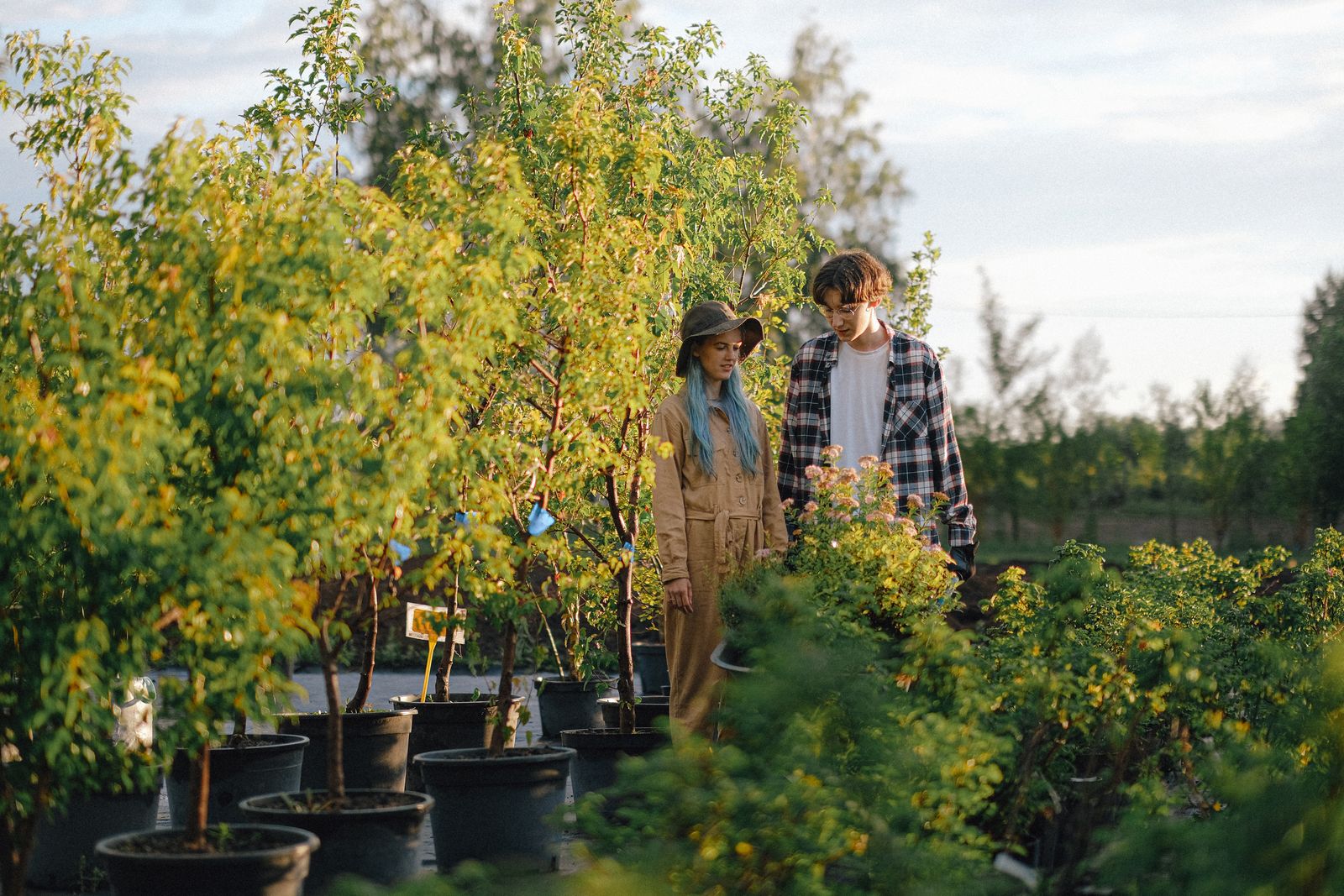
You are standing beside a trolley of plants. One of you pictures flowers by the door. The other has already planned a vegetable patch. Then comes the less photogenic question: who will water everything when you are both busy?
Gardening for couples can begin with one pot, a borrowed tool and a decision you both want to make. The planting afternoon is only part of it. Afterwards come watering, costs, changing weather and different ideas about what looks good. A shared garden needs room for those differences. Start with a project small enough to learn from, and agree how you will care for it before bringing it home.
Choose what you want from the garden
Each finish this sentence: “I would enjoy a garden that gives us…” Perhaps you want herbs for cooking, flowers you can see from the kitchen, time outside or somewhere to sit. Name the experience before choosing the plants. Two people saying “a nice garden” may be imagining quite different weekends.
If one wants vegetables and the other wants a colourful doorstep, you could try one suitable container each, or choose one first project and leave the other for later. Agree which parts are shared and which are personal. A separate patch can be part of a shared space without needing joint approval for every leaf.
Check interest as well as taste. “Would you like to plant something together, or would you rather enjoy the space while I garden?” is a useful invitation. Company, practical help and taking on a hobby are different offers. A partner can appreciate your enthusiasm without signing up to regular gardening.
Let your actual space guide the first purchase
Before shopping, look at the intended spot at different times of day. Note sunlight, exposure to wind, access to water and the room available when plants grow. Bring those observations to a local nursery or use reliable guidance for your climate and chosen species. A plant that looks lovely in the shop still needs a suitable home.
For rented or shared spaces, check permission before changing beds or attaching anything to a building. Keep routes and exits clear, and check relevant building guidance before adding heavy containers to a balcony. Choose plants appropriate for a household with children or pets, checking the specific species with a reliable safety resource rather than assuming an edible-looking leaf is harmless.
The RHS explains that containers can suit limited space, but need regular attention. They require drainage holes, and the appropriate potting compost depends on the plants. Choose the plant and its growing requirements together; a decorative pot alone is not a complete plan. Seasonal planting advice also needs to match your location.
Budget for the weeks after planting
Set a first-project spending limit that includes the plant, suitable container, compost and any tools you actually need. Borrow where possible. Check the care instructions before buying fertiliser or a collection of gadgets. Leave larger purchases until you know you both want to continue.
Compare the upkeep, too. The RHS notes that plants in containers generally need more regular maintenance than plants in open ground, including watering and occasional feeding. Ask what your chosen plant needs in its particular conditions. Avoid a fixed watering routine copied from a different climate or species.
If your schedules already feel full, choose a smaller project or postpone it. “I can manage one pot, but not a whole bed this month” gives the plan a realistic size. Include care during holidays and busy periods in the decision. Enthusiasm at the checkout cannot provide that care later.
Share responsibility without becoming the garden supervisor
Write down the recurring jobs for this project: checking care needs, watering, buying supplies when needed and tidying the space. Agree who owns each job and how you will cover an absence. Owning a task includes noticing when it needs doing; it should not require the other person to keep issuing reminders.
For example: “I will check these pots and water according to their needs on my days. Can you take the other days, and shall we tell each other when we swap?” Keep a simple note if it helps prevent duplicated or missed care. Adjust the arrangement to the plants and your availability rather than insisting on identical minutes of work.
Stan Tatkin describes simultaneous care in PACT as attending to yourself and your partner together. Applied here, that means considering both the garden you want and the capacity your partner has. This is an everyday planning suggestion, not a therapy exercise. Either person can decline a task or the project itself.
If you have become the default gardener, try: “I agreed to share this, and I am now managing all the care. What can you genuinely take on?” If the answer is very little, reduce the shared project or decide freely whether to keep it as your own hobby. An unspoken obligation is not a workable care plan.
Source:Stan Tatkin: caring for yourself and your partner at the same time
Make the first session pleasant enough to repeat
Choose one small job you can finish or leave safely at a sensible stopping point. Put the supplies within reach, wear suitable clothing and follow the plant’s instructions. Plan around each person’s comfort and mobility; nobody has to kneel, lift a heavy pot or work through discomfort to participate.
If one of you knows more, ask before taking over. “Would you like me to demonstrate, work beside you or leave you to try?” gives the learner options. Explain a practical requirement without treating a different preference as a mistake. The plant may need drainage; it does not necessarily need your favourite colour of pot.
Clear up together, including returning borrowed tools and putting supplies away appropriately. Then enjoy the space for a moment if you want to. You are allowed to sit beside an unfinished garden. There is no prize for turning every free afternoon into landscaping.
Review the care before expanding the garden
After a few weeks of your agreed trial, compare what happened with what you expected. Did the location suit the plant? Were the jobs manageable? Did either person have to chase the other? Use those answers to choose the next step: keep the same scope, change the arrangement, learn more or stop.
If a plant struggles, check its conditions and seek species-specific advice before replacing it. A dead plant can tell you something about watering, weather or suitability. It is not a verdict on your relationship. Own any missed commitment without making plant survival a measure of love.
Add another project only when both want the ongoing care it brings. Those flowers and vegetables may eventually fit side by side. For now, one pot with a plan you can both keep is a perfectly good beginning.