One of you is putting the kettle on. The other is looking for work shoes. You had planned to catch up, but the only conversation so far is about where the keys went.
Relationship habits are repeated actions with shared meaning. They can be as small as a proper goodbye, ten minutes after the children sleep, or a Sunday look at the week ahead. Their value is not ceremony. It is giving connection a reliable place in ordinary life before urgent tasks take every available space.
Choose the moment that keeps getting lost
Do not begin by copying another couple's morning routine. Ask where your relationship repeatedly disappears: leaving the house, reuniting after work, going to bed, planning the week, or returning after conflict. Build one habit around that transition.
A useful habit is specific, mutual, and light enough for the life you actually have. If it requires ideal sleep, no interruptions, and matching moods, it is a special occasion rather than a dependable habit.
Try five low-friction habits
Pick one and adapt it. Meaning matters more than duration.
- Departure: say where you are headed emotionally as well as practically.
- Reunion: spend the first five minutes greeting before exchanging logistics.
- Appreciation: name one specific action that made the day lighter.
- Planning: identify the week's pressure point and protect one shared moment.
- Repair: after a pause, return with impact, accountability, and one next step.
“Micro-romance” is informal language for small deliberate gestures. Save a funny observation to share when welcome, or leave a private note about a moment you enjoyed. Ask how it lands; a small surprise can still be unwelcome.
The Gottman Institute includes ordinary meals, transitions and play in habits of connection, with both people’s time and energy considered. Love is respect keeps participation voluntary. Touch, replies and public posts remain optional. A gesture does not replace shared work or repair.
Source:The Gottman Institute: creating shared meaning;love is respect: expectations and voluntary boundaries
Give the habit a minimum version
Create a full version and a depleted version. A weekly date might become tea on the kitchen floor after bedtime. A twenty-minute check-in might become one question and a hug. The minimum version protects continuity without pretending capacity is unlimited.
Either partner can ask to pause or redesign a habit. A connection practice that creates dread, debt, or scorekeeping has stopped serving its purpose.
Let a reminder carry the prompt, not the pressure
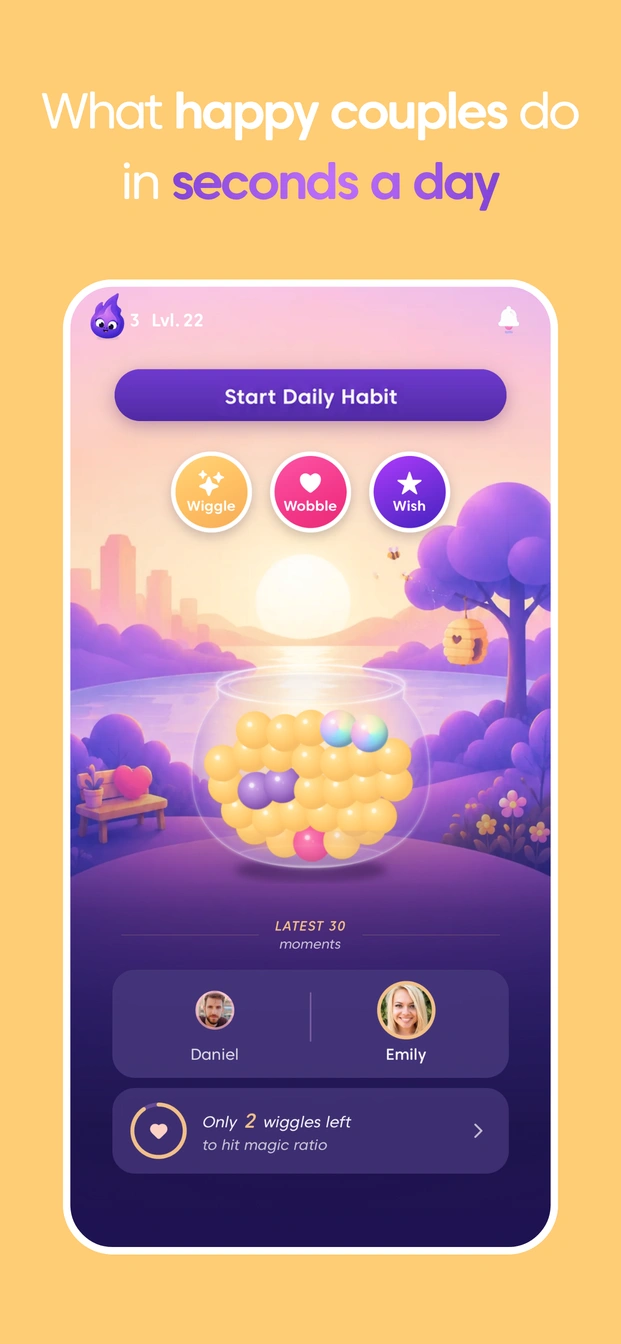
Let a simple reminder carry the planning so neither partner has to hold the whole habit in mind. Agree a low-energy version, such as one appreciative sentence before sleep. Either person can ask to skip or reschedule. A habit should protect a meeting point while leaving the human moment flexible.